Open Source Handbook of Nursing/Skin Integrity
Gut and skin health are closely connected. Both are essential for overall well-being and can affect each other in many ways. The gut, also known as the digestive system, processes food and absorbs nutrients. The skin, the body’s largest organ, acts as a barrier and reflects what’s happening inside the body. When the gut is healthy, the skin often looks healthy too. But when the gut is unbalanced, skin problems can appear.
The Gut Microbiome
The gut is home to trillions of tiny organisms, including bacteria, fungi, and viruses. These are known as the gut microbiome. A healthy gut has a good balance of helpful and harmful bacteria. This balance helps with digestion, supports the immune system, and produces vitamins.
When the gut microbiome is out of balance—a condition called dysbiosis—it can lead to inflammation and poor nutrient absorption. This may cause skin issues like acne, eczema, psoriasis, or rosacea. Research shows that restoring the gut’s balance can improve some skin conditions.
How Gut Health Affects Skin
There are several ways the gut and skin communicate:
Inflammation: An unhealthy gut can lead to chronic inflammation, which often shows up on the skin as rashes, redness, or breakouts.
Nutrient Absorption: The gut helps absorb vitamins and minerals like zinc, vitamin A, and omega-3 fatty acids—nutrients that are important for skin repair and hydration.
Toxins and Waste Removal: A healthy digestive system removes waste from the body. If digestion is slow or unbalanced, toxins can build up, possibly affecting skin clarity and tone.
Immune System: About 70% of the immune system lives in the gut. A strong immune system helps fight skin infections and reduce irritation.
How to Improve Gut and Skin Health Improving gut health may lead to clearer, healthier skin. Here are some tips:
Eat a Balanced Diet: Include fiber-rich foods like fruits, vegetables, whole grains, and legumes. These feed good gut bacteria.
Probiotics and Prebiotics: Probiotics (found in yogurt, kefir, and fermented foods) add good bacteria to the gut. Prebiotics (found in garlic, onions, and bananas) feed those bacteria.
Stay Hydrated: Water helps the body remove toxins and supports skin hydration.
Avoid Excess Sugar and Processed Foods: These can feed harmful bacteria and worsen inflammation.
Manage Stress: High stress levels can disturb gut function and trigger skin flare-ups.
Get Enough Sleep: Quality sleep supports gut repair and helps skin regenerate.
Final Thoughts
The link between gut and skin health is strong. While more research is still being done, many people notice better skin when they focus on improving their digestion. By eating well, managing stress, and supporting the gut microbiome, it’s possible to improve skin appearance naturally. Healthy skin often starts from within.
Integumentary system
The skin or integumentary system
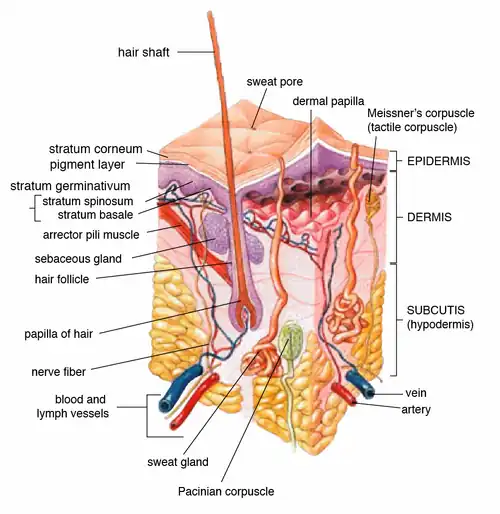
Functions of skin
The integumentary system serves as a protective barrier; the skin helps to regulate the body temperature by several mechanisms. These mechanisms consist of:
Protection
- Abrasion, invasion, water loss, UV protection
Vitamin D synthesis
- Epidermal keratinocytes when exposed to UV light helps maintain health of skeleton by increasing absorption of Ca2+
Sensation
- Receptors for heat, cold, touch, pressure, vibration and pain
Thermoregulation
- Thermo receptors and sweat glands
- Hypothalamus controls cutaneous arteries and sweat glands to retain or dissipate heat
Psychological and social functions
- Appearance and social acceptance
- Facial expression and nonverbal communication
Epidermis
The epidermis is composed of the outermost layers of cells in the skin which together with the dermis forms the cutis. The epidermis is a stratified squamous epithelium, composed of proliferating basal and differentiated suprabasal keratinocytes which acts as the body's major barrier against an inhospitable environment, by preventing pathogens from entering, making the skin a natural barrier to infection. It also regulates the amount of moisture released from the body by diaphoresis (sweating).
The epidermis has no nerves or vessels. It is nourished by diffusion from the dermis. The epidermis constists of
- keratinocytes (95% majority)
- melanocytes
- Langerhans cells
- Merkel cells
Rete ridges (wrinkles) are epidermal thickenings that extend downward between dermal papillae. These are or interest to nurses where they can be mapped as "Langer's lines" indicating the direction in which they usually lie. "Crow's feet" at the outer edge of the eyes is an example of skin wrinkles which typically allow movement in one direction. Incisions along these lines will leave the least obvious scar, while incisions across these lines will cause dog-eared puckering of the healed skin.
Blood capillaries are found beneath the epidermis, and are linked to an arteriole and a venule.
Dermis
The dermis is the largest layer of skin between the epidermis and the hypodermis which is responsible for giving the skin its structural support. The dermis consists of white fibrous tissues containing elastic fibers to allow the skin to stretch. It also contains blood vessels, lymph vessels, hair follicles and glands that produce sweat. This helps regulate the body temperature and keeps the skin from drying out. [Tabbners Nursing Care, 5th Edition, Chapter 37, Page 617]
Hypodermis
The hypodermis is the innermost and thickest layer of the skin, it is specialised in accumulating and storing fats, known as adipocytes it also acts as an energy reserve.
Its purpose is to attach the skin to underlying bone and muscle as well as supplying it with blood vessels and nerves also its Fat serves as padding and insulation for the body.
The hypodermis also fastens the skin to the underlying surface, provides thermal insulation, and absorbs shocks from impacts to the skin.
Nerves
Glands
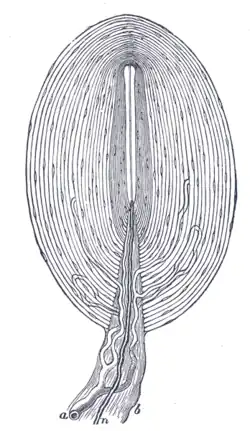
Sweat glands include the apocrine gland which may act as a sex attractant also opens in to the hair follicle. Eccerine gland which control body temperture.
Nursing Problems

Skin integrity can be defined as skin being whole, intact and undamaged. Poor skin integrity can lead to further complications such as pressure sores, infections and skin tears. Skin integrity can be assessed using the Braden Scale, the Norton Scale or the Waterlow Scale.
Maintaining skin integrity can be done by using a daily moisturizing pH balanced lotion to protect dry skin, avoid consistent contact with a wet environment, maintaining optimal hydration, maintaining good nutrition, maintaining mobility and avoiding falls.
Skin tears
A skin tear is the separation of the epidermis from the dermis or both the epidermis and the dermis from deeper structure. According to silver chain star classification system a tear can be classed into one of 5 categories: 1
- 1a (the edges can be realigned and the colour of the skin flap is normal),
- 1b (the edges can be realigned but the colour of the skin flap is pale, dark or dusky),
- 2a (the edges can not be realigned and the colour of the skin flap is normal),
- 2b (the edges can not be realigned and the colour of the skin flap is pale, dark or dusky),
- 3 (the skin flap is completely gone).
Parasites
Parasite : The skin is a primary site of infection, most parasites are harmless. All parasitic groups can involve the skin or subcutaneous tissue.Food and water are the most common sources of parasite and invading organism transmission.
Cancer
Burns
A burn is a type of injury to the flesh or skin, which is a part of the integumentary system of the body. Burns are one of the most serious skin injuries, as they not only disrupt physical function but as well can cause severe emotional trauma. Burns may be caused by
- Dry heat
- Electricity
- Moist heat
- Radiation
- Chemicals
Heat in contact with the skin causes coagulation of the protein in the tissue cells, and the depth of the burn, or the degree of the burn relates to the amount of thermal energy that comes in contact with the skin.
A burn is described as both being superficial, partial thickness or full thickness, and when the burn surface area is assessed often the rule of nines is used, which cuts the body into sections and is able to give a rough measure of percentage of body that contains the burn.
Nutrition
Skin integrity may be threatened by diet deficient in protein, Vitamin B2 or sulphur.
.
References
- Martin, E. (2008) A Dictionary of Nursing. Oxford University Press. UK
- Stainton,K., Hughson,J., Funnell,R., Koutoukidis,G. & Lawrence,K. (2008) Tabbner's Nursing Care. Elsiever. Australia.5th Edition, chapter 37, page 632
- David Moreau (Ed) (2008) Anatomy and Physiology Made Incredibly Easy. Lippincott Williams and Wilkins. South Australia
- Rothrock, J. (2010) Alexander's Care of the Patient in Surgery. Elseiver. Sydney.
- Smeltzer,S., Bare,B., Hinkle,J. & Cheever, K. (2009) Brunner and Suddarth's Textbook of Medical-surgical Nursing. Lippincott Williams and Wilkins. Tasmania