Jean-Christophe

Jean-Christophe (1904‒1912) is the novel in 10 volumes by Romain Rolland for which he received the Prix Femina in 1905 and which contributed to his receiving the Nobel Prize for Literature in 1915. The sequence tells the story of a German musical genius living in France and incorporates views on music, society, and understanding between nations. The quotations below are from the English translation by Gilbert Cannan (1910–1913) unless otherwise cited.
Quotes
Dawn (1904)
- [P]erhaps there are in us forces other than mind and heart, other even than the senses — mysterious forces which take hold of us in the moments when the others are asleep; and perhaps it was such forces that Melchior had found in the depths of those pale eyes which had looked at him so timidly one evening when he had accosted the girl on the bank of the river, and had sat down beside her in the reeds — without knowing why — and had given her his hand.
- Part 1
- Islands of memory begin to rise above the river of his life. At first they are little uncharted islands, rocks just peeping above the surface of the waters. Round about them and behind in the twilight of the dawn stretches the great untroubled sheet of water; then new islands, touched to gold by the sun.
- Part 1
- He was not a bad man, but a half-good man, which is perhaps worse—weak, without spring, without moral strength, but for the rest, in his own opinion, a good father, a good son, a good husband, a good man—and perhaps he was good, if to be so it is enough to possess an easy kindness, which is quickly touched, and that animal affection by which a man loves his kin as a part of himself. It cannot even be said that he was very egoistic; he had not personality enough for that. He was nothing. They are a terrible thing in life, these people who are nothing. Like a dead weight thrown into the air, they fall, and must fall; and in their fall they drag with them everything that they have.
- Part 2 (of Jean-Christophe's father)
- Everything is music for the born musician.
- Part 3
Morning (1904)
- His loyal and eager nature, brought for the first time to the test of love, gave itself utterly, and demanded a gift as utter without the reservation of one particle of the heart. He admitted no sharing in friendship. Being ready to sacrifice all for his friend, he thought it right and even necessary that his friend should wholly sacrifice himself and everything for him. But he was beginning to feel that the world was not built on the model of his own inflexible character, and that he was asking things which others could not give.
- Part 1: The Death of Jean Michel
Youth (1904)
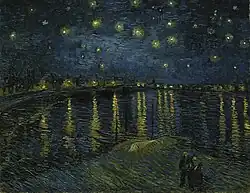
- When Christophe at last made up his mind to go to bed, chilled in body and soul, he heard the window below him shut. And, as he lay, he thought sadly that it is cruel for the poor to dwell on the past, for they have no right to have a past, like the rich: they have no home, no corner of the earth wherein to house their memories: their joys, their sorrows, all their days, are scattered in the wind.
- Part 1: The House of Euler
- [D]id he then love God, or was it only the music, as an impudent priest said to him one day in jest, without thinking of the unhappiness which his quip might cause in him? Anybody else would not have paid any attention to it, and would not have changed his mode of living — (so many people put up with not knowing what they think!) But Christophe was cursed with an awkward need for sincerity, which filled him with scruples at every turn. And when scruples came to him they possessed him forever.
- Part 1: The House of Euler
- Wrong or right, he would never again for anything in the world have recourse to a priest. He admitted that these men were his superiors in intelligence or by reason of their sacred calling; but in argument there is neither superiority, nor inferiority, nor title, nor age, nor name; nothing is of worth but truth, before which all men are equal.
- Part 1: The House of Euler

- Be reverent before the dawning day. Do not think of what will be in a year, or in ten years. Think of to-day. Leave your theories. All theories, you see, even those of virtue, are bad, foolish, mischievous. Do not abuse life. Live in to-day. Be reverent towards each day. Love it, respect it, do not sully it, do not hinder it from coming to flower. Love it even when it is gray and sad like to-day. Do not be anxious. See. It is winter now. Everything is asleep. The good earth will awake again. You have only to be good and patient like the earth. Be reverent. Wait. If you are good, all will go well. If you are not, if you are weak, if you do not succeed, well, you must be happy in that. No doubt it is the best you can do. So, then, why will? Why be angry because of what you cannot do? We all have to do what we can. ... Als ich kann."
- Part 3: Ada (Gottfried to Jean-Christophe)
- You are a vain fellow. You want to be a hero. That is why you do such silly things. A hero! ... I don't quite know what that is: but, you see, I imagine that a hero is a man who does what he can. The others do not do it.
- Part 3: Ada (Gottfried to Jean-Christophe)
- Variant: "A hero is one who does what he can. The others don't." Norbert Guterman (ed.) The Anchor Book of French Quotations ([1965] 1990) p. 365
- I, too, shall wake again.
- Part 3: Ada (Jean-Christophe to himself)
Revolt (1905)
- "There are some dead who are more alive than the living."
"No, no! It would be more true to say that there are some who are more dead than the dead."
"Maybe. In any case there are old things which are still young."
"Then if they are still young we can find them for ourselves. ... But I don't believe it. What has been good once never is good again."- Part 1: Shifting Sands
- All these young millionaires were anarchists, of course: when a man possesses everything it is the supreme luxury for him to deny society: for in that way he can evade his responsibilities
- Part 1: Shifting Sands
The Market-Place (1908)
- It is the artist's business to create sunshine when the sun fails.
- Part 1
- "Stones are hard everywhere."
- Part 3
Love and Friendship (1910)
- "The public will only stand genius in infinitesimal doses, sprinkled with mannerisms and fashionable literature. ... A 'fashionable genius'! Doesn't that make you laugh? ... What waste of power!"
The Burning Bush (1911)
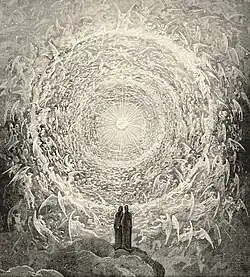
- The continual endeavor of man should be to lessen the sum of suffering and cruelty: that is the first duty of humanity.
- He could not think of the animals without shuddering in anguish. He looked into the eyes of the beasts and saw there a soul like his own, a soul which could not speak; but the eyes cried for it: "What have I done to you? Why do you hurt me?" He could not bear to see the most ordinary sights that he had seen hundreds of times—a calf crying in a wicker pen, with its big, protruding eyes, with their bluish whites and pink lids, and white lashes, its curly white tufts on its forehead, its purple snout, its knock-kneed legs:—a lamb being carried by a peasant with its four legs tied together, hanging head down, trying to hold its head up, moaning like a child, bleating and lolling its gray tongue:—fowls huddled together in a basket:—the distant squeals of a pig being bled to death:—a fish being cleaned on the kitchen-table. ... The nameless tortures which men inflict on such innocent creatures made his heart ache. Grant animals a ray of reason, imagine what a frightful nightmare the world is to them: a dream of cold-blooded men, blind and deaf, cutting their throats, slitting them open, gutting them, cutting them into pieces, cooking them alive, sometimes laughing at them and their contortions as they writhe in agony. Is there anything more atrocious among the cannibals of Africa? To a man whose mind is free there is something even more intolerable in the sufferings of animals than in the sufferings of men. For with the latter it is at least admitted that suffering is evil and that the man who causes it is a criminal. But thousands of animals are uselessly butchered every day without a shadow of remorse. If any man were to refer to it, he would be thought ridiculous.—And that is the unpardonable crime. That alone is the justification of all that men may suffer.
- The slaughter accomplished by man is so small a thing of itself in the carnage of the universe! The animals devour each other. The peaceful plants, the silent trees, are ferocious beasts one to another. The serenity of the forests is only a commonplace of easy rhetoric for the literary men who only know Nature through their books! ... In the forest hard by, a few yards away from the house, there were frightful struggles always toward. The murderous beeches flung themselves upon the pines with their lovely pinkish stems, hemmed in their slenderness with antique columns, and stifled them. They rushed down upon the oaks and smashed them, and made themselves crutches of them. The beeches were like Briareus with his hundred arms, ten trees in one tree! They dealt death all about them. And when, failing foes, they came together, they became entangled, piercing, cleaving, twining round each other like antediluvian monsters. Lower down, in the forest, the acacias had left the outskirts and plunged into the thick of it and, attacked the pinewoods, strangling and tearing up the roots of their foes, poisoning them with their secretions. It was a struggle to the death in which the victors at once took possession of the room and the spoils of the vanquished. Then the smaller monsters would finish the work of the great. Fungi, growing between the roots, would suck at the sick tree, and gradually empty it of its vitality. Black ants would grind exceeding small the rotting wood. Millions of invisible insects were gnawing, boring, reducing to dust what had once been life. ... And the silence of the struggle! ... Oh! the peace of Nature, the tragic mask that covers the sorrowful and cruel face of Life!
.jpg)
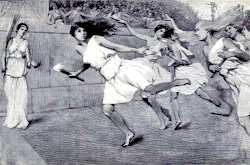
- Ce n'est pas la paix que je cherche, c'est la vie.
- It is not peace that I seek, but life.
- "Thou art come back to me, Thou art come back to me! O Thou, whom I had lost! ... Why didst Thou abandon me?"
"To fulfil My task, that thou didst abandon."
"What task?"
"My fight."
"What need hast Thou to fight? Art Thou not master of all?"
"I am not the master."
"Art Thou not All that Is?"
"I am not all that is. I am Life fighting Nothingness. I am not Nothingness, I am the Fire which burns in the Night. I am not the Night. I am the eternal Light; I am not an eternal destiny soaring above the fight. I am free Will which struggles eternally. Struggle and burn with Me."
- "Thou art not alone, and thou dost not belong to thyself. Thou art one of My voices, thou art one of My arms. Speak and strike for Me. But if the arm be broken, or the voice be weary, then still I hold My ground: I fight with other voices, other arms than thine. Though thou art conquered, yet art thou of the army which is never vanquished. Remember that and thou wilt fight even unto death."
"Lord, I have suffered much!"
"Thinkest thou that I do not suffer also? For ages death has hunted Me and nothingness has lain in wait for Me. It is only by victory in the fight that I can make My way. The river of life is red with My blood."
"Fighting, always fighting?"
"We must always fight. God is a fighter, even He Himself. God is a conqueror. He is a devouring lion. Nothingness hems Him in and He hurls it down. And the rhythm of the fight is the supreme harmony. Such harmony is not for thy mortal ears. It is enough for thee to know that it exists. Do thy duty in peace and leave the rest to the Gods."
- Christophe returned to the Divine conflict. ... How his own fight, how all the conflicts of men were lost in that gigantic battle, wherein the suns rain down like flakes of snow tossing on the wind! ... He had laid bare his soul. And, just as in those dreams in which one hovers in space, he felt that he was soaring above himself, he saw himself from above, in the general plan of the world; and the meaning of his efforts — the price of his suffering, were revealed to him at a glance. His struggles were a part of the great fight of the worlds. His overthrow was a momentary episode, immediately repaired. Just as he fought for all, so all fought for him. They shared his trials, he shared their glory.
"Companions, enemies, walk over me, crush me, let me feel the cannons which shall win victory pass over my body! I do not think of the iron which cuts deep into my flesh, I do not think of the foot that tramples down my head, I think of my Avenger, the Master, the Leader of the countless army. My blood shall cement the victory of the future. ..."
- God was not to him the impassive Creator, a Nero from his tower of brass watching the burning of the City to which he himself has set fire. God was fighting. God was suffering. Fighting and suffering with all who fight and for all who suffer. For God was Life, the drop of light fallen into the darkness, spreading out, reaching out, drinking up the night. But the night is limitless, and the Divine struggle will never cease: and none can know how it will end. It was a heroic symphony wherein the very discords clashed together and mingled and grew into a serene whole! Just as the beech-forest in silence furiously wages war, so Life carries war into the eternal peace.
The wars and the peace rang echoing through Christophe. He was like a shell wherein the ocean roars. Epic shouts passed, and trumpet calls, and tempestuous sounds borne upon sovereign rhythms. For in that sonorous soul everything took shape in sound. It sang of light. It sang of darkness, sang of life and death. It sang for those who were victorious in battle. It sang for himself who was conquered and laid low. It sang. All was song. It was nothing but song.
The New Dawn (1912)
- Skepticism, riddling the faith of yesterday, prepares the way for the faith of to-morrow.
- Part 4
- Variant: "Skepticism, riddling the faith of yesterday, prepared the way for the faith of tomorrow." George Seldes (ed.) The Great Quotations (1960) p. 864
Incomplete citation
- Je sais enfin ce qui distingue l'homme de la bête: ce sont les ennuis d'argent.
- I know at last what distinguishes man from animals; financial worries.
- Reported in Norbert Guterman (ed.) The Anchor Book of French Quotations ([1965] 1990) p. 365
- Tout homme qui est un vrai homme doit apprendre à rester seul au milieu de tous, à penser seul pour tous- et au besoin contre tous.
- Every man who is truly a man must learn to be alone in the midst of all others, and if need be against all others.
- Reported in Norbert Guterman (ed.) The Anchor Book of French Quotations ([1965] 1990) p. 365