New wave music
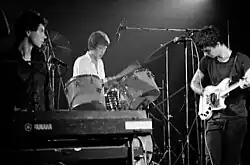
New wave is a music genre that encompasses pop-oriented styles and originally emerged during the mid-to late 1970s as a lighter and more melodic "broadening of punk culture". The term was originally coined by Seymour Stein, the founder of Sire Records, who used it as a catch-all for the various styles of music that emerged after punk rock. The term later evolved to encompass many contemporary popular music styles, including synth-pop, alternative dance and post-punk.
New wave commercially peaked during the late 1970s into the early 1980s with an abundance of one-hit wonders. In 1981, the MTV channel was launched, which heavily promoted and popularized new-wave acts in the United States. By the mid-to late 1980s, new wave was taken over by the New Romantic movement in the UK, while in the US, it declined in popularity due to the rise of other more commercially successful music genres. Other new wave-inspired subgenres emerged during the 1980s such as coldwave, minimal wave and darkwave. By the 1990s and 2000s, new wave experienced a brief revival, and influenced later internet microgenres such as chillwave, and vaporwave.
Quotes about new wave music
- To some people, new wave was the music made by bands who were too traditionally melodic to be classed as punk; bands that believed in good ol’ songwriting, in craft and – shock horror – quite liked the idea of having a hit (step forward The Pretenders, Elvis Costello, The Police etc). To others, new wave music was the futuristic, keyboard-based music made by people inspired as much by Berlin-era Bowie and Kraftwerk’s Trans-Europe Express as by punk itself (Human League, Cabaret Voltaire, Ultravox, Gary Numan et al). Then there’s the ‘art-punks’ – Wire, Gang Of Four, Pere Ubu, Delta 5, The Raincoats – bands obsessed with the form of their music, of avoiding ‘rockist' clichés and aiming for something more avant-garde and challenging. If these three camps are distinct enough, then consider that ska-punks like The Specials, The Beat and The Selecter are also considered part of the same movement/phenomenon and suddenly you’re faced with a musical genre that is futuristic-yet-retro, avant-garde-yet-traditional, populist-yet-obscure, solipsistic on one hand, political on the other.
- Scott Rowley of Loudersound (May 12, 2025) [1]