Author:Philip Coombs Knapp
 sister projects: Commons category, Wikidata item
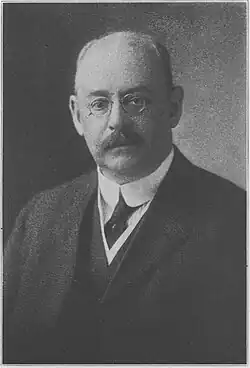
Philip Coombs Knapp
Works
- "Observations on the Cutaneous and Deep Reflexes" (1885) (start transcription)
- "A Case of Professional Neurosis of Co-Ordination of Unusual Origin" (1887) (start transcription)
- "Hemiplegia in Childhood" (1887) (start transcription)
- A Text-Book of Medicine: For Students and Practitioners by by Adolf von Strümpell, translated with Herman F. Vickery in four American editions (1887, 1895, 1901, 1911) (transcription volumes: 1, 2, 3)
- "Nervous Affections Following Injury, 'Concussion of the Spine', 'Railway Spine' and 'Railway Brain'" (1888) (start transcription)
- "Accidents from the Electric Current" (1890) (start transcription)
- The Insanity of Doubt (1890) in The American Journal of Psychology Vol. 3, No. 1. (transcription project)
- "Astasia–Abasia" (1891) (start transcription)
- The Pathology, Diagnosis and Treatment of Intra-Cranial Growths (1891) (start transcription)
- "A Case of Tumor of the Cerebellum, in Which Trephining Was Done for the Relief of Increased Intra-Cranial Pressure" (1892) (start transcription)
- "Address by the President" (1895) (start transcription)
- "The Alleged Reflex Causes of Nervous Disease" (1895) (start transcription)
- "The Nature of Neurasthenia" (1896) (start transcription)
- "Anesthesia in Diseases of the Spinal Cord" (1897) (start transcription)
- "Landry's Paralysis" (1900, with John Jenks Thomas) (start transcription)
- "The Unity of the Acute Psychoses" (1900) (start transcription)
- "Bony Sensibility" (1904) (start transcription)
- "The Reflexes in Long Distance Runners. A Study of the Influence of Fatigue Upon Certain Reflexes" (1904, with John Jenks Thomas) (start transcription)
- "Confusional Insanity and Dementia Præcox" (1908) (start transcription)
- "Criminal Responsibility" (1916) (start transcription)

Some or all works by this author were published before January 1, 1930, and are in the public domain worldwide because the author died at least 100 years ago. Translations or editions published later may be copyrighted. Posthumous works may be copyrighted based on how long they have been published in certain countries and areas.
Public domainPublic domainfalsefalse