Greenland by the Polar Sea/Chapter 8
THE result of the previous day's reconnoitrings was that, from the high mountains situated 10 kilometres in along the fjord, one might expect to get a view of all the territory which we had yet to map. The Island we named Hanne Island, whilst the mountain which was to be the base for the last observations was called Thule Mountain.
Without any greater difficulty we covered the distance to Thule Mountain on good ice, and Koch and Ajako ascended the mountain at nine o'clock in the morning. There was a gale blowing, and during the day we observed many and increasing Föhn-clouds which, like huge dragons, drifted across the sky. At two o'clock Ajako returned with the following letter from Koch:
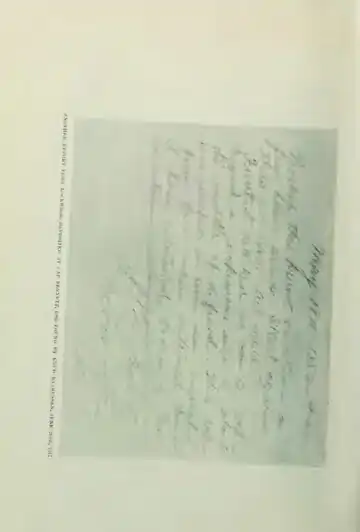
"Thule Mountain,
"21. 6. 1917.
"Ajako and I arrived at the top here, which is 780 metres high, sufficiently early for a noon observation. De Long Fjord is large, and rich in surprises. Let me start at Cape Mohn. To the south of this, a fjord inward due west, with a sound to the Polar Sea and valley across to the sound south of Hanne Island, so that I see water in front of Cape Ramsay Island. Then a fjord due south-west with valley possibly to Mascart Inlet. Further, fjord due south with inlet ice as background. Further, a broad fjord, some thirty kilometres long, due southeast, from which two valleys due east, whereof the northernmost cuts far into the country. There is probably a lake in the direction of Frederick Hyde Fjord. Due north from here Wild Fjord lies as a panorama. The two large new fjords can be taken with a vertical base. Strong and cold wind will unfortunately delay sketching somewhat. But the air in over Peary Land continues very clear."
After this encouraging telegram I immediately went up to the survey station. It was a laborious and strenuous walk

across loose stones, but when at last I got a full view of the surroundings I nearly dropped with surprise at the enormous Arctic landscape which lay before my eyes.
On the one hand the Polar Sea, the enormity of which I have often described; on the other Peary Land, which I knew from Independence Fjord, but which here, towards the icebound ocean, had quite another winter character than it has in its eastern regions during the same season. The land was everywhere covered with snow, with glaciers on all tops, and every hope of finding hunting-ground, corresponding in conditions to Poppy Valley on Adam Biering Land, was torn up by the root.
By the foot of Thule Mountain we had found the remains of very old musk-ox bones on some small grassy slopes; but they crumbled with age and gave us no encouragement to try our fortune across the surrounding coastland.
Lockwood, who gave this fjord its name, passed so far out at sea because of the travelling conditions that he got no survey of de Long Fjord, which he viewed as a single great fjord cleaving its way in between the mountains of Peary Land. Later on, Robert Peary passed by almost the same route, and, as also his observations gave no details of the fjord complex, the theory has arisen that de Long Fjord probably continued so far inland that it, as a huge channel, combined itself with the assumed Peary Channel approximately midway between Nordenskjöld Fjord and Independence Fjord. After the whole of the big Peary Channel had been reduced to a myth, partly by the first, partly by the second Thule Expedition, there was still the possibility that de Long Fjord—at any rate in contradistinction to the quite small Nordenskjöld Fjord—might penetrate so deeply as to create around its head a stretch of country of the same kind as that which in 1912 I had found by the head of Independence Fjord. If this were the case, the distance from here to Poppy Valley in Adam Biering Land, so prolific in game, was so short that with advantage one might have founded a station for rest and recreation, which would have been of especial benefit to the botanist.
These reasons had, on the 31st of May, led to the division of the expedition—a division which in itself did not seem very risky, as we knew that, in any case, it would be possible to save oneself by a comparatively speedy journey on good ice down to the neighbourhood of Cape Morris Jesup, where the Americans twice had found conditions favourable. But this plan, as we have already heard, proved impossible to carry out; an unusually persistent storm had contributed considerably to the destruction of the first party's dogs. Thanks to our better fortune, Koch and I were at last standing on the summit of the mountain from which the work of the expedition could be completed. This fjord was the northernmost goal of our voyage. Even here by Greenland's last, large fjord, one might expect surprises and results to be added to those already experienced. This was the reason why we, in spite of our comrades' uncanny experiences, had staked everything on reaching this spot, and as now we stood by our goal, with our return journey safeguarded by seal meat and blubber, we all felt that inexpressible joy known only to him who has shouldered a task and carried it through in face of all difficulties.
We named the two new fjords, calling the one due southwest Th. Thomsen Fjord, after the inspector of the National Museum, who so often during our preparations had helped us with good advice. The great main fjord itself kept, of course, its name of de Long Fjord; whilst the 30 kilometres long fjord to the north-east of the middle arm was named after Professor Bernhard Böggild, a member of the scientific committee of the expedition. Not only the geological but also the cartographical and ethnographical explorations found their natural conclusion here. The stretch of coast from de Long Fjord to Cape Bridgeman was in 1900 traversed by Peary, and no deviations in the contours of the land in the form of islands or deep indentations had been found. Thus no correcting work was left for us; no mistakes were possible. When Peary had come to wrong conclusions with regard to places like Nordenskjöld Fjord and de Long Fjord, not to mention Independence Fjord, these mistakes were, as I have already pointed out, easy to explain. Due to the great stretches of entirely unsurveyed country which Peary had to traverse, his task assumed a form which merely demanded that the main contours of the land should be put down and the details left, these details becoming the work of the subsequent expeditions for which the first excursions showed the way. Thus there was no reason for us to continue, all the more as on our departure we had pointed out this fjord as being our absolute goal.
As far as our work was concerned, I had arrived at a result which could not be elaborated by a continuation of our excursion; for the possibility of a migration of Eskimos north of Greenland had been disposed of by the natural conditions which we found here by the last great fjord on the north-west coast. The land offers no means of subsistence, and the inner regions of the fjord, being covered with floating inland-ice, forbid the seal-hunt so essential for all Eskimo life.
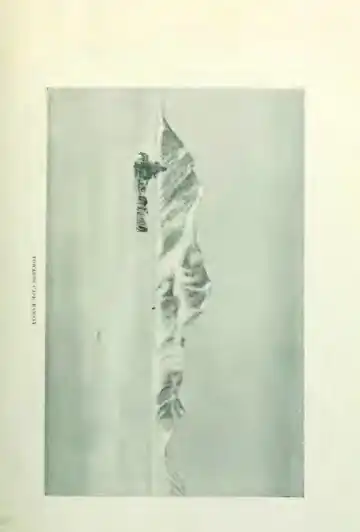
On the same day we built a final beacon, the Thule beacon, near the large mountain which gave us the terminating view of the last regions of Greenland which were not yet known.
June 22nd-23rd.—The sudden arrival of the spring had melted the snows, so that we began to find water beneath. This is a stage rightly feared by all Arctic travellers; for at any moment the sledge may be sucked down by the wet snow, when it is only with the greatest difficulty that one can get it up again. The good seal meat had once more stiffened the tails of the dogs, but the slushy ground quickly wore down their courage. It therefore seemed high time to go down to Dragon Point.
Even our skis, which had been of such great advantage to us, were heavy as lead with all the wet snow that clung to them; we rubbed them with a candle, but the beneficent results did not last long. And the snowshoes which bore up so well in the soft snow were now, like the skis, enveloped in thick layers of wet snow and hung like weights round our feet.
We started at seven o'clock on the 22nd, and by one o'clock we had covered the 22 kilometres to Lockwood's Beacon, where we pitched our tents and cooked as many hares as we could manage to eat. We had shot seven on the way during the day, and with the addition of a piece of blubber these lean hares were a delicacy. We suffered from the heat and went about half-naked; the temperature on this day swung between 3° and 6° (Cent.) of warmth.
At nine o'clock in the evening we continued the journey, each man having, during this camping period, disposed of rather more than one hare. The sudden mildness was now succeeded by raw, cold weather, and all the ice of the Polar Sea seemed to drive its cold at our faces, creating a feeling which is not exactly in keeping with midsummer night.
Some movement in the ice was already apparent, as we could plainly feel a fissure from Cape Mohn right across to Cape Neumeyer, whilst another at a distance of 2 kilometres from land followed the coast towards Cape Wykander.
June 24th.—The cool weather improved the going, as we had expected, and it was a pleasure to note the good distance made by the dogs.
We were all anxious to celebrate midsummer night, and our wish was fulfilled in an amusing manner. Just as we passed Boatswain Sound by Cape Ramsay, a large barnacle-goose flew above our heads, circled for awhile round us, and, to our great surprise, flew down a short distance in front of the dogs within easy shooting distance. It had, of course, to pay with its life for its curiosity, and it provided us with a delicious midsummer-night roast, broiled in blubber according to the rules of the art. The day's journey ended at six o'clock in the morning by Low Point, where once more for a few hours we let ourselves be teased by the seal, which apparently had its fixed quarters here. Forced by necessity, we decided, after repeated attempts, to leave it in peace. The distance made during the day was 24 kilometres.
June 25th-26th.—The first thoughts which occur to one on waking up are connected with the ice and the going which it will provide. We were now in the midst of such a tedious grind that for the first hours of the day's journey we could not avoid slow-going. Involuntarily we started slowly—one had to save one's strength! But as a rule the stiffness of the limbs quickly disappeared and the journey was finished with a firm step.
The snow was quickly melting along the coast; great pools lay below the ice-foot, and the water had already begun to find outlets in the fissures which were being formed off the coast.
By Cape Bennett we found a tumbledown beacon, where another letter from Lockwood had been deposited. A short greeting to other coastal travellers had been scribbled, probably during a coffee-halt; otherwise the note contained nothing remarkable.
After twelve hours of a dead-march through heavy snow with water beneath, we reached Cape Neumeyer, having covered a distance of 30 kilometres.
Once more fog and rain forced us to lie over, and in order to suffer as little as possible from the bad state of the ground, we covered our skis and the over-runners of our sledges with sealskin, which slips easily across the wet snow.
June 27th.—The Eskimos say that at the bottom of the ocean lives an old hag who rules over all aquatic animals. The history of her life is involved and circumstantial. Originally she was married to a storm-bird in human likeness, but on a voyage, when the travellers were on the point of being wrecked and were of the opinion that her husband was the cause of the storm, she was thrown overboard. As she tried to cling to the gunwale of the boat, her hands were chopped off, whereafter she sank to the bottom. At the bottom of the sea she developed peculiar and great qualities, which made her the ruler of all aquatic creatures. She got a small house where she lived according to human customs, happily and in abundance. But her handless stumps of arms made it impossible for her to comb her hair or to free herself from vermin. The wise men among the humans had to assist her in this work by spirit journeys to the bottom of the sea. In her gratitude she sent huge shoals of animals to the sealing-grounds, so that the camp which had sent its necromancer down to her grew rich. She was given the name of "The Great Flesh-pot."
Although none of us were in the possession of qualities which permit one to make a spirit journey down to the source of all abundance, Ajako was of the opinion that somehow the woman favoured us; for after some hours of toilsome travelling through snow and water, we skirted a little low headland where we were literally stranded, because none of us could manage any more. We climbed the mountains so as to view the neighbourhood, and there we discovered to our surprise that some seals were lying outside our accidental camp. It was the first time such fortune had smiled on us, for the seals we had caught up to now were solitary animals. We immediately tried hunting, and in the course of a few hours we had shot three big, fat seals. Now was our opportunity to feed without stint, and the dogs soon lay with distended stomachs struggling for breath out of sheer satiety. In addition the generous land, which is called Blue Point, presented us with three hares and some ptarmigan.
We consistently continued our fattening cure. It would be of no avail to continue hunting, as we could not transport any more through the difficult snow; but we looked upon our future fate with confidence. In happy gratitude we erected a memorial to the old Eskimo myth by calling this strip of land "The Flesh-pot."
In the baking sun nobody could be bothered to pitch the tent. We spread our sleeping-skins across some oblong hollows which, filled with cassiope, provided the softest of beds for weary bodies. We only managed to smoke our pipes before we dropped to sleep. A flock of ptarmigan settled down cackling near the sledges, but no one had any thought of killing.
June 28th.—Ever since we left de Long Fjord our thoughts had constantly been occupied with the fate of our comrades; their train of tottering starved men and dogs had been a cheerless sight. If they did not soon meet with good hunting they would probably lose all their dogs, and this would be an additional difficulty for the return journey.
It was close to this camp that we had last met them, and, as the decision was that they should make for the whirlpool and attempt to catch seals there, we expected to find a message from them somewhere in the vicinity. But we vainly examined all conspicuous points in the hope of finding beacons, and as we found nothing, we began to believe that they were yet in the fjord.
We then made for Cape Salor through heavy going, making very slow pace with our overfed dogs and meat-laden sledges. As usual, the snow was soft and wet; the skis carried us, but the dogs sank through, and generally we found water under the snow. Koch walked a short distance ahead on snowshoes, and we others followed with sledges and dogs. But as he approached Cape Salor he put on greater and greater speed, and we who followed in his tracks could see that his steps became increasingly longer. At length, a few kilometres further ahead, we discovered the reason for this sudden hurry, as our comrades' tent suddenly appeared on the utmost headland of Elison Island. We also increased our speed, and off we ploughed through snow and water. With beating hearts we floundered through the slush; even the dogs caught our eagerness and increased their pace. What news would we find? Were they yet in possession of the dogs? Or were we confronted with a journey of 1,000 kilometres with three sledges?
Under these isolated conditions, in the large silent fjords, so far from other men, one forms a society of one's own, where even the smallest occurrence attracts one's attention and becomes significant.
No wonder, therefore, that the news we were now racing towards, and which would be so decisive for our arrangements, made us impatient and nervous. For no life was apparent round the tent, although it was our custom, whenever we had been separated for a few days, to celebrate the reunion with shouts and merry gestures. At long last we were relieved as a man appeared outside the tent, flinging his arms out with joy over our arrival. Shouts would reach him. We stopped and for a moment there was a breathless silence.
"How are you?"
"All well."
"How many dogs have you left?"
"Nine."
"Have you food?"
"Harrigan has shot six seals!"
Rejoicings and confusion of reunion!
June 29th.—At last a day arrived when we could take matters easy; we were not entirely inactive, though it would have been better for the dogs merely to lie in the sunshine digesting in a semi-conscious state. Two seals shot by Harrigan were fetched from the mouth of I. P. Koch Fjord, and another was lying on the ice off Cape Salor at a distance of about 4 kilometres from land. In the midst of the pack-ice, young ice was lying by a rather considerable whirlpool, looking strangely lost between the massive pressure-ridges.
June 30th.—It would have been tempting to remain here for some time yet, as the Flesh-pot situated not far away seemed to offer good seal-hunting. But we dared not postpone the journey down to St. George Fjord; a sojourn on this spot might be of immediate significance as a fattening period for the dogs and ourselves, but to freight a considerable load with the snow in this state was unthinkable. Furthermore, after the experiences of the past few days, we were sure to run across those seals, of which we have so often spoken, by Dragon Point.
We started at five o'clock in the morning, but already by nine o'clock we had to stop on a floe of dry ice as the heat of 3° (Cent.) drove the perspiration out of our bodies so forcibly that all our pores hurt; simultaneously we were so fagged out by the melting slush and the deep water that it would not be to our advantage if we made longer journeys at a stretch.
The day's journey had been a modest one: the odometer registered 8 kilometres.
Twelve hours later, after the cool of the evening had set in, we made another attempt. We found, however, that going was still worse. The sledges constantly stuck in the slush, and when the dogs gave up all attempts and lay down quietly looking at us with their sad eyes, there was nothing else to do but put all our strength into getting the sledges out of the waterlogged snow.
July 1st.—Out of consideration for the dogs, we pitched our tents as early as ten o'clock in the morning. Although we had only made a distance of 10 kilometres, we were all weary and fagged out. The Eskimos call this state of the ground "putsineq." The weather was uncommonly beautiful; glorious colours, blue and reddish, rested on Nordenskjöld Fjord's wonderful landscape. For the first time we looked at this fjord approximately from the point from which Peary previously observed it; and we realized why it was that, with this view, he assumed it to be the inlet of an enormous channel stretching right to Independence Fjord. From this point one sees only the coast mountains out by the mouth which forms the entrance to the channel. The end of the fjord is not at all visible, as the inland-ice which finishes the fjord merges entirely into the ocean-ice, which thus seems to stretch infinitely inward. Some backs of Nunatak, which from the fjord itself we discern far in on the inland-ice, appear deceptively from this point to be a continuation of the coast mountains, and it has thus seemed obvious to connect this with the fjord on the east side. We looked across the beautiful landscape towards Elison Island, which, bathed in sun and with the clear sky above its sharp silhouette, breathed a peace and quietness far removed from the disturbance which, a few hours ago, we made by our progress. The air was then reverberating with incessant and desperate shouts to the dogs, now raging, now coaxing; whilst the animals gave up entirely and could hardly be forced through the last piece of slush on to the little island where the rest and the well-deserved strong food awaited them.
We pitched our tent on an insignificant little flat island which we called "Centrum Island," as during the following days it formed the centre for the cartographical station in this fjord-complex.
July 2nd.—Wulff's party, which had chosen a somewhat different route from Cape Salor, arrived to-day at noon. Unfortunately they had lost a dog on the way; it fell down, unable to travel any further. We now had twenty dogs left, and these were sufficient for the homeward journey if only we succeeded in keeping them in good condition by plentiful feeding.
Ajako and Bosun were for the time being sent to the mouth of Nordenskjöld Fjord, where on the outward journey we cached some clothes and other property which was not required for the journey; they returned at midnight with a hunting-bag of eight hares and one ptarmigan. At the same time Harrigan shot a seal a short distance from our tent, so that conditions for acquiring food now seem promising.
During camp-life a fire, crackling and sparkling and with smoke which rises straight in the air, is the thing which most tenderly attunes one's feelings. One understands the offerings of the ancients when, with the holy fire and smoke, they sent their message up in the air towards all that which they did not understand. But though we have become less naïve, we cannot get away from the worship of nature which this atmosphere forces on to us. Our mind is moved; in our thoughts we write poems, some light and happy, others heavy and sad; but, wherever inspiration may lead us, something is roused in our inmost being, created by the fire. And not least in nature like this, where one stands as a puny being, forced to fight a daily battle against forces stronger than oneself. Life always seems to hang by a thread, because the day's coming events are so uncertain and so far beyond one's own control; and this it is which, more than the many intensive joys one experiences, stamps one's thoughts and feelings up here.
A strange country! We are now in the month of July, but, notwithstanding this, large expanses are yet covered with snow to such an extent that one prefers to move about on snowshoes or skis. The flowers are not merely patient, they even put all their strength in opposition to their mortal enemy, and grow and blossom in many places in the midst of the snow.
A large country, which seems doubly large to him who must struggle forth along its coasts, with open and wide horizons which through fjords and bays run up across the inland-ice to meet the sky in a dazzling distancy which makes one's eyes ache. Steep, reddish-brown cliffs shoot up from the sea as blockading walls, desirous of restricting the view; but in the midst of the mountains' barrenness, the sun splashes its colours so that the poverty is ennobled and becomes the work of the great light-bringer.
A land without a heart, where everything living must fight a hard battle for life and food. Like a frozen expanse of cold and waste, the Polar Sea presses itself up above the shores to meet its brother the inland-ice, who threatens the last land from the inner deserts. The poor seals coming from the living ocean occasionally find their way up on the ice, but everywhere they are frightened by the giant mill of the pressure-ice, and they rush down in the deep again before they have had time to enjoy the sky and the sun. Down there they become lean, their layer of blubber becomes thin, they must fight against the cold which the fat ones do not notice; and the mighty vault above the ocean passages separates them from their friends, so that they are banished to the dead loneliness.
Now and then the ice-bear plants his paws on the snow of the shore-ice, but the tracks show that he walks with feet turned inward and with pinched belly, distrustful of the ice which is stronger than he himself, and with no inducement to visit the valley tracts, which are too poor to offer him a meal. Only the musk-ox and the little lemming, which is the incarnation of easy contentment, thrive and grow fat, together with the hares, whose teeth and digestion are satisfied with frozen little plants. Amidst these the slim ermine, like a bunch of living muscles, stalks hares and lemmings; rich, fat and strong it is, quite unconcerned with the poverty of the country because it lets the little vegetarians work for it. It is the good beast of prey of the region, because it is open in its animosity; thus it becomes a happy and sympathetic animal in spite of its blood-smeared jaws. Behind it sneaks the white wolf, which is always hungry and thin, although it seeks its food on the same hunting-ground: cowardly and wretched, with lowered tail and the fever of an evil conscience in its eyes—more of a hyena than a hunter.
Behind the lives of all these animals lies a miracle, the miracle of the country and the vegetation; for in this one month during which the sun rules, grows the mean vegetation which creates animal life. Without these stunted children of the sun, there would be no musk-ox, no lemming, no hare; and without these, again, no ermine, no wolf—just a cemetery where only the silence of death broods.
From our flat camp-ground we had an excellent view of Nordenskjöld Inlet. Our thoughts took their own way in across the inland-ice at its narrowest point to Independence Fjord. From here it was that Mylius-Erichsen, Hagen, and Brönlund were the first men to view the head of the fjord which overthrew the whole theory of the Peary Channel; and even if they did not succeed in mapping their discovery, they laid down a report in a beacon with full information as to what they had seen. The tragedy which struck them down on their homeward journey, when they were forced to spend the summer in a place in Denmark Fjord, poor in game, is too well known for me to repeat. Suffice it to mention the heroic task which Jörgen Brönlund accomplished, when from the depot in Lambert Land he fetched food for his two comrades who could keep up no longer-a sacrifice which was not destined to save their lives. When, later on, after the death of Mylius-Erichsen and Hagen, Brönlund once more struggled along to Lambert Depot to deposit the scientific results in a spot where they would be found, he wrote his own and his camp comrades' death-rune on the leaf of his diary with the proud words:
"Skirted 79-Fjord after attempt return journey across inland ice in November month. I arrived here in waning moonshine and could not continue because of the darkness and of frost-bites to my feet. The corpses of the others will be found in the middle of the fjord in front of glacier. Hagen died 10th November and Mylius about ten days later."
The concluding work of charting the head of Independence Fjord and its near surroundings was executed by the first Thule Expedition, when Peter Freuchen was cartographer. In memory of his contribution towards the exploration of the northernmost Greenland, we named the great expanse between I. P. Koch Fjord and Nordenskjöld Fjord, Peter Freuchen Land.