Page:Czecho-Slovak Student Life, Volume 18.djvu/166
to Chicago where he was associate-editor of the daily “Národ” for a short time. He moved on again to South Dakota, and then returned to Iowa.
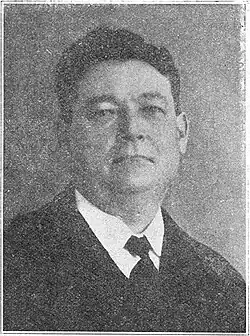
About 1901 the editor of “Hlas”, F. Novák, died, and Msgr. Hessoun, founder of the newspaper, offered the position to Dr. Dostál. It was not until September of that year, however, that the offer was accepted. Then Dr. Dostál’s first care was to change the “Hlas”, which had thus far been published as a weekly, to a semi-weekly and to enlarge and improve the entire establishment. This period of journalistic activity was a very busy one for Dr. Dostál. He superintended the publication not only of “Hlas” but of “Česká Žena”, a monthly founded by his wife and himself, of “Katolický Sokol”, and of “Katolický Dělník”. While he was editor, there were published also at the “Hlas” press Habenicht’s History of the Czechs in America and the poetical works of the Rev. Stephen Brož. Dr. Dostál himself at this time wrote a drama, a travelogue, and a series of patriotic and occasional poems.
Journalistic work, however, forms only one phase of Dr. Dostál’s activity. Even during his editorship, he was zealously at work organizing the Czech element in America. He gave countless lectures throughout the north-central part of the country and dedicated himself whole-heartedly to his cause.
In 1904, during the World Exposition at St. Louis, he called the first Pan-Slav and Journalistic Convention. Dr. Dostál was elected president and thus found another field for his activity. He was one of the founders, also, of the Hessoun Orphanage near St. Louis. His further work in these directions was abruptly ended by the Great War.
His “Hlas” was one of the first papers to protest against the grasping policies of the Central Powers. This put Dr. Dostál in a rather unenviable position, but he maintained his courageous course. Indeed, the record of all his labors during the War for an independent Czechoslovakia is an account of insurmountable obstacles overcome, of bitter opposition changed by his uncompromising determination to enthusiastic