Page:St. Nicholas (serial) (IA stnicholasserial321dodg).pdf/493
eaten, the kind-hearted farmer found the whole flock huddled together under the hay, apparently enjoying the warmth. Strange to say, they never come for their food when it snows or rains. When they have breakfasted, unless frightened, they usually walk away to their favorite haunts in the grove across the fields. They never alight on the trees, but occasionally perch on the rail fence. Once or twice, when no one was in sight, they came near the house.
For six weeks the quails have enjoyed Farmer Glover’s bounty. When spring opens, their kind-hearted protector will meet them only in the fields and woods; but whenever bob-white’s musical call comes over the summer meadows it will bring pleasant memories of those winter breakfasts in the snowy barnyard. W. C. Knowles.
How Elk Shed and Renew their Antlers.
How many persons, among the many thousands that annually visit our zoölogical parks, realize, as they pause to admire the noble bucks of the deer family,—particularly the wapiti, or American elk,—that their branching antlers are cast off annually and renewed and well hardened within the short period of seven months?
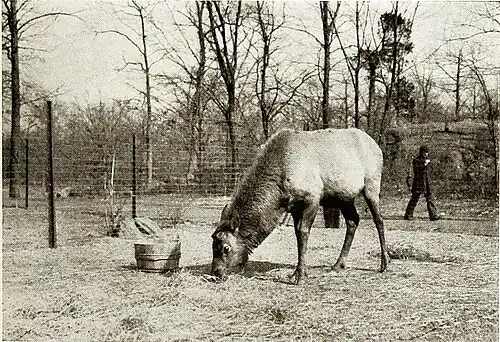
American Elk, or Wapiti, one week after antlers were dropped.
(Copyright, 1904, by New York Zoölogical Society.)
Before describing the manner in which elk shed their antlers, I should like to explain the difference between “antlers” and “horns.” All the members of the deer family—the moose, caribou, elk (in Europe the animal which we call moose is known as elk), and smaller deer—possess antlers, while the appendages on the heads of goats, sheep, cattle, and the like are known as horns, and, with one exception,—the American antelope or pronghorn,—are retained by their owners throughout life.
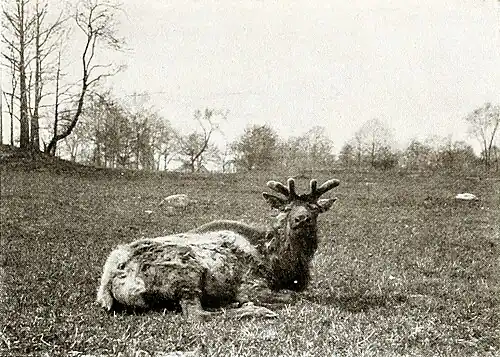
American Elk, or Wapiti, one month after antlers were dropped.
(Copyright, 1904, by W. T. Hornaday.