Page:The Czechoslovak Review, vol3, 1919.djvu/237
Courtesy of “The Americas.”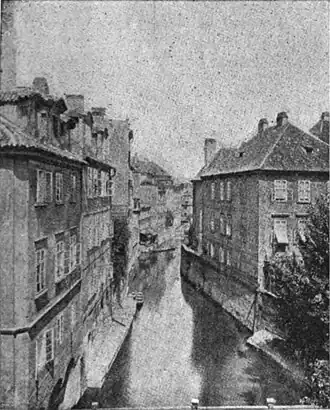
Veneian-like Canals in Old Prague. Courtesy of “The Americas.”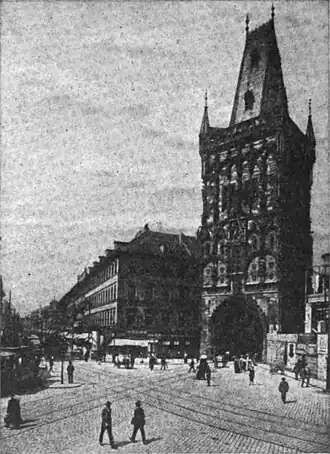
“Powder Gate”, Prague.at the Hapsburg court; it seemed the fulfilment of a statement that Francis Joseph made after the disastrous war of 1866. When an Austrian statesman advised the emperor to turn his back on the Germans and become ruler of the smaller Slav nations, Francis Joseph said: “I would rather be the porter in the Hohenzollern palace.”
William and his big men, Hindenburg and Ludendorf, were frequent visitors to Vienna. Now and then the papers were allowed to mention it, but usually nobody knew of their visits. Their conferences were far from harmonious, for Charles under the influence of Zitta tried to break William’s hold. Sometimes their discussions resembled the debates of Russian muzhiks as to how to pull out a wagon stuck in mud; the fact that William and Charles were emperors by divine grace did not make their conferences different from recriminations of two partners whose business is in a bad way. In September 1917 William talked to Charles about far-reaching, deeply-laid military plans, but Charles would not respond. He was afraid to furnish men, he did not have the necessary supplies, and the harvest did not suffice for his own subjects, to say nothing of feeding the fat Prussians. Charles feared greatly a repetition of hunger outbreaks that scared him so much during the past summer. When he remained passive in face of William’s optimistic explanations, William became nettled and made contemptuous remarks about the military capacity of his young brother. Charles flared up and refused to discuss the plans any further. The German emperor departed full of complaints and making no secret of his anger with Charles. In the end he had his way by manipulating Austrian officials.
When Hindenburg planned his offensive against the Russians at Tarnopol in 1917, Charles was advised beforehand and was invited to witness the German triumph. The offensive was successful, and yet Charles came back dejected, for the offensive was stopped far sooner than was on the program; the German steam-roller would not work even against disrupted Russia.—Charles stormed around the palace declaring that he would drop everything, and Zitta had to comfort him and interest him in new plans. On that occasion he cried aloud and swore that he would throw over William and his generals.