Page:The New England Magazine 1891, 5.1.djvu/5
and lazily nipped off the dahlia buds. The town bestirred itself. Angry housewives, roused from their sleep by waking dreams of depredation committed, drove the sheep away with stock and stone. The following night the creatures returned, and the fisher-husbands, back from their business, sallied forth in vain. They could not run as fast as the women; and week after week the sheep took all they wanted. It became necessary finally to establish the sublime order of hog-reeves, who were privileged to seize any swine or sheep going at large which were not marked with the proper and duly entered mark of the owner, and to prosecute as the law directs.
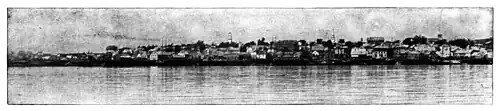
Eastport, from Campobello.
But how could sheep be marked when their fleece forbade their being branded! As notable house-keepers vie with each other in receipts, so did each islander try to invent striking deformities for his sheep only the sucking lambs retained their birthrights till their later days. Because Mulholland made two slits in the right ear and took off its top, Parker cut off a piece from the left ear of his sheep, and Bowers made a crop under the left car of his animal, close to its head. Yet the sheep ran loose until the people were directed to raise twelve pounds for building two cattle pounds, and William Fitz-William Owen, the admiral, was ap pointed to erect the same. The poor rates had again lessened; woe to the pauper boarders:—for the admiral wanted money for many another improvement on which his mind was bent. The General Sessions of the peace dared not neglect any suggestion which was made by a man who entertained all the distinguished guests who came to Passamaquoddy Bay; for his fame had spread far and wide as host, theologian, and magnate. If it were difficult to restrain sheep and swine, still more difficult was it to prevent the trespasses of geese. Though many a bird was clipped in its infancy, and in winter killed and put down amid layers of snow and sent to the admiral as a peace offering or as tribute, still the public troubles increased, until it was ordered that horses and cattle should be impounded. Then peace at midnight and safety by day rested over the island, for it was even resolved "that all dogs of six months old and upwards should be considered of sufficient age to pay the tax"; but in what manner they were compelled to offer their own excuse for being remains unsolved. Perhaps no legal quibble was ever raised concerning the wording of the statute.
Admiral Owen himself was overseer of the poor and school trustee. Whenever a roof-raising occurred, he knew how to send the children home to look after the chores, that their elders might join in