The Tempest (Rackham)/Act 2
ACT THE SECOND.
SCENE I.
Another part of the island.
Enter a Alonso, Sebastian, Antonio, Gonzalo, Adrian, Francisco, and others.
Gonzalo.
Alonso.
Our sorrow with our comfort. Prithee, peace.
Sebastian.
He receives comfort like cold porridge.
Antonio.
The visitor will not give him o’er so.
Sebastian.
Look, he ’s winding up the watch of his wit: by and by it will strike.
Gonzalo.
Sir,—
Sebastian.
One: tell.
Gonzalo.
Sebastian.
A dollar.
Gonzalo.
Dolour comes to him, indeed: you have spoken truer than you purposed.
Sebastian.
You have taken it wiselier than I meant you should.
Gonzalo.
Therefore, my lord,—
Antonio.
Fie, what a spendthrift is he of his tongue!
Alonso.
I prithee, spare.
Gonzalo.
Well, I have done: but yet,—
Sebastian.
He will be talking.
Antonio.
Which, of he or Adrian, for a good wager, first begins to crow?
Sebastian.
The old cock.
Antonio.
The cockerel.
Sebastian.
Done. The wager?
Antonio.
A laughter.
Sebastian.
A match!
Adrian.
Though this island seem to be desert,—
Sebastian.
Ha, ha, ha! So, you ’re paid.
Adrian.
Uninhabitable and almost inaccessible,—
Sebastian.
Yet,—
Adrian.
Yet,—
Antonio.
He could not miss ’t.
Adrian.
It must needs be of subtle, tender and delicate temperance.
Antonio.
Temperance was a delicate wench.
Sebastian.
Ay, and a subtle; as he most learnedly delivered.
Adrian.
The air breathes upon us here most sweetly.
Sebastian.
As if it had lungs and rotten ones.
Antonio.
Or as ’twere perfumed by a fen.
Gonzalo.
Here is everything advantageous to life.
Antonio.
True: save means to live.
Sebastian.
Of that there ’s none, or little.
Gonzalo.
How lush and lusty the grass looks! how green!
Antonio.
The ground indeed is tawny.
Sebastian.
With an eye of green in ’t.
Antonio.
He misses not much.
Sebastian.
No; he doth but mistake the truth totally.
Gonzalo.
But the rarity of it is, which is indeed almost beyond credit,—
Sebastian.
As many vouched rarities are.
Gonzalo.
That our garments, being, as they were, drenched in the sea, hold notwithstanding their freshness and glosses, being rather new-dyed than stained with salt water.
Antonio.
If but one of his pockets could speak, would it not say he lies?
Sebastian.
Ay, or very falsely pocket up his report.
Gonzalo.
Methinks our garments are now as fresh as when we put them on first in Afric, at the marriage of the king’s fair daughter Claribel to the King of Tunis.
Sebastian.
’Twas a sweet marriage, and we prosper well in our return.
Adrian.
Tunis was never graced before with such a paragon to their queen.
Gonzalo.
Not since widow Dido’s time.
Sebastian.
What if he had said “widower Æneas” too? Good Lord, how you take it!
Adrian.
“Widow Dido” said you? you make me study of that: she was of Carthage, not of Tunis.
Gonzalo.
This Tunis, sir, was Carthage.
Antonio.
Widow! a pox o’ that! How came that widow in? widow Dido!
Adrian.
Carthage?
Gonzalo.
I assure you, Carthage.
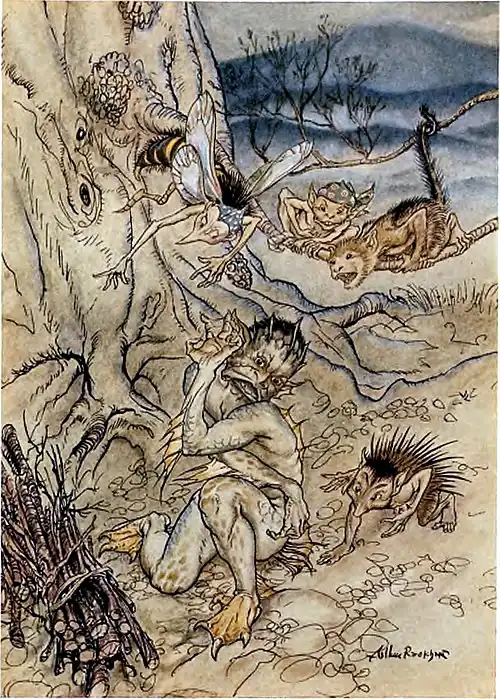
Sebastian.
His word is more than the miraculous harp; he hath raised the wall and houses too.
Antonio.
What impossible matter will he make easy next?
Sebastian.
I think he will carry this island home in his pocket and give it his son for an apple.
Antonio.
And, sowing the kernels of it in the sea, bring forth more islands.
Gonzalo.
Ay.
Antonio.
Why, in good time.
Gonzalo.
Sir, we were talking that our garments seem now as fresh as when we were at Tunis at the marriage of your daughter, who is now queen.
Antonio.
And the rarest that e’er came there.
Sebastian.
Bate, I beseech you, widow Dido.
Antonio.
O, widow Dido! ay, widow Dido.
Gonzalo.
Is not, sir, my doublet as fresh as the first day I wore it? I mean, in a sort.
Antonio.
That sort was well fished for.
Gonzalo.
When I wore it at your daughter’s marriage?
Alonso.
Francisco.
Alonso.
He came alive to land. No, no, he’s gone.
Sebastian.
Alonso.
Who hath cause to wet the grief on ’t. Prithee, peace.
Sebastian.
Alonso.
The fault ’s your own. So is the dear’st o’ the loss.
Gonzalo.
Sebastian.
When you should bring the plaster. Very well.
Antonio.
And most chirurgeonly.
Gonzalo.
Sebastian.
When you are cloudy. Foul weather?
Antonio.
When you are cloudy. Foul weather? Very foul.
Gonzalo.
Had I plantation of this isle, my lord,
Antonio.
He ’ld sow ’t with nettle-seed.
Sebastian.
He ’ld sow ’t with nettle-seed. Or docks, or mallows.
Gonzalo.
And were the king on ’t, what would I do?
Sebastian.
’Scape being drunk for want of wine.
Gonzalo.
Sebastian.
No sovereignty;— Yet he would be king on ’t.
Antonio.
The latter end of his commonwealth forgets the beginning.
Gonzalo.
Sebastian.
No marrying ’mong his subjects?
Antonio.
None, man; all idle: whores and knaves.
Gonzalo.
Sebastian.
To excel the golden age God save his majesty!
Antonio.
Long live Gonzalo!
Gonzalo.
Long live Gonzalo! And,—do you mark me, sir?
Alonso.
Prithee, no more: thou dost talk nothing to me.
Gonzalo.
I do well believe your highness; and did it to minister occasion to these gentlemen, who are of such sensible and nimble lungs that they always use to laugh at nothing.
Antonio.
’Twas you we laughed at.
Gonzalo.
Who in this kind of merry fooling am nothing to you: so you may continue and laugh at nothing still.
Antonio.
What a blow was there given!
Sebastian.
An it had not fallen flat-long.
Gonzalo.
You are gentlemen of brave mettle; you would lift the moon out of her sphere, if she would continue in it five weeks without changing.
Enter Ariel, invisible, playing solemn music.
Sebastian.
We would so, and then go a bat-fowling.
Antonio.
Nay, good my lord, be not angry.
Gonzalo.
No, I warrant you; I will not adventure my discretion so weakly. Will you laugh me asleep, for I am very heavy?
Antonio.
Go sleep, and hear us.
[All sleep except Alonso, Sebastian, and Antonio.
Alonso.
Sebastian.
Antonio.
Alonso.
And watch your safety. Thank you. Wondrous heavy.
[Alonso sleeps. Exit Ariel.
Sebastian.
What a strange drowsiness possesses them!
Antonio.
It is the quality o’ the climate.
Sebastian.
Antonio.
Sebastian.
Dropping upon thy head. What, art thou waking?
Antonio.
Do you not hear me speak?
Sebastian.
Antonio.
Sebastian.
Antonio.
Sebastian.
Trebles thee o’er. Well, I am standing water.
Antonio.
I ’ll teach you how to flow.
Sebastian.
Antonio.
Sebastian.
Antonio.
Sebastian.
Antonio.
Sebastian.
That Ferdinand is drown’d? He ’s gone.
Antonio.
Sebastian.
Who’s the next heir of Naples. Claribel.
Antonio.
Sebastian.
Antonio.
Sebastian.
Methinks I do.
Antonio.
Sebastian.
Antonio.
Sebastian.
But, for your conscience?
Antonio.
Sebastian.
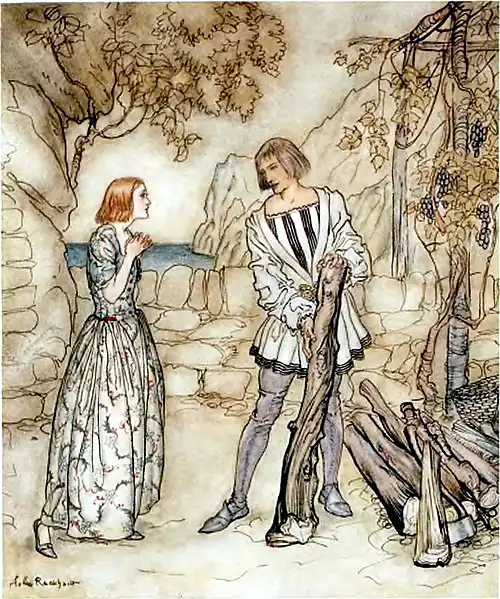
Antonio.
Sebastian.
To fall it on Gonzalo. O, but one word.[They talk apart.
Re-enter Ariel, invisible.
Ariel.
[Sings in Gonzalo’s ear.
Antonio.
Then let us both be sudden.
Gonzalo.
Then let us both be sudden. Now, good angels
Preserve the king.[They wake.
Alonso.
Gonzalo.
Wherefore this ghastly looking? What ’s the matter?
Sebastian.
Alonso.
It struck mine ear most terribly. I heard nothing.
Antonio.
Alonso.
Of a whole herd of lions. Heard you this, Gonzalo?
Gonzalo.
Alonso.
Gonzalo.
Alonso.
Ariel.
SCENE II.
Another part of the island.
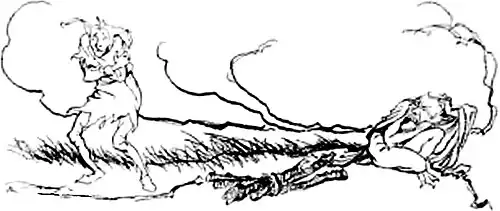
Enter Caliban with a burden of wood.
A noise of thunder heard.
Caliban.
Enter Trinculo.
Trinculo.
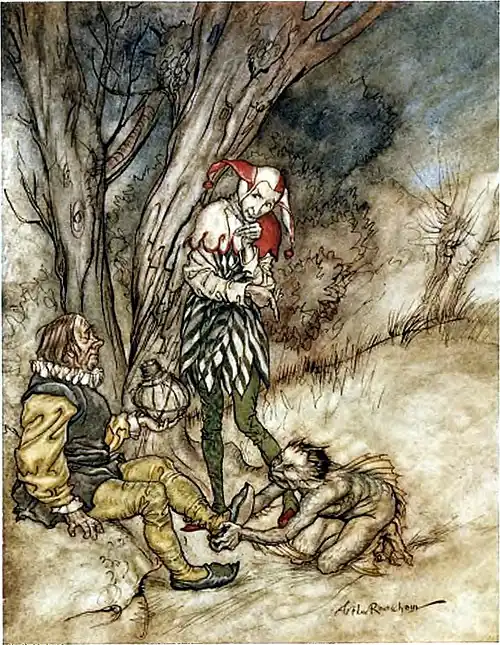
Here ’s neither bush nor shrub, to bear off any weather at all, and another storm brewing; I hear it sing i’ the wind: yond same black cloud, yond huge one, looks like a foul bombard that would shed his liquor. If it should thunder as it did before, I know not where to hide my head: yond same cloud cannot choose but fall by pailfuls. What have we here? a man or a fish? dead or alive? A fish: he smells like a fish; a very ancient and fish-like smell; a kind of not of the newest Poor-John. A strange fish! Were I in England now, as once I was, and had but this fish painted, not a holiday fool there but would give a piece of silver: there would this monster make a man; any strange beast there makes a man: when they will not give a doit to relieve a lame beggar, they will lay out ten to see a dead Indian. Legged like a man! and his fins like arms! Warm o’ my troth! I do now let loose my opinion; hold it no longer: this is no fish, but an islander, that hath lately suffered by a thunderbolt. [Thunder] Alas, the storm is come again! my best way is to creep under his gaberdine; there is no other shelter hereabout: misery acquaints a man with strange bed-fellows. I will here shroud till the dregs of the storm be past.
Enter Stephano, singing: a bottle in his hand.
Stephano.
This is a very scurvy tune to sing at a man’s funeral: well, here ’s my comfort. [Drinks.
[Sings.]
This is a scurvy tune too: but here’s my comfort. [Drinks
Caliban.
Do not torment me: Oh!
Stephano.
What ’s the matter? Have we devils here? Do you put tricks upon ’s with savages and men of Ind, ha? I have not ’scaped drowning to be afeard now of your four legs; for it hath been said, As proper a man as ever went on four legs cannot make him give ground; and it shall be said so again while Stephano breathes at ’s nostrils.
Caliban.
The spirit torments me; Oh!
Stephano.
This is some monster of the isle with four legs, who hath got, as I take it, an ague. Where the devil should he learn our language? I will give him some relief, if it be but for that. If I can recover him and keep him tame and get to Naples with him, he’s a present for any emperor that ever trod on neat’s-leather.
Caliban.
Do not torment me, prithee; I ’ll bring my wood home faster.
Stephano.
He ’s in his fit now and does not talk after the wisest. He shall taste of my bottle: if he have never drunk wine afore, it will go
Caliban.
Thou dost me yet but little hurt; thou wilt anon, I know it by thy trembling: now Prosper works upon thee.
Stephano.
Come on your ways; open your mouth; here is that which will give language to you, cat: open your mouth; this will shake your shaking, I can tell you, and that soundly: you cannot tell who’s your friend: open your chaps again.
Trinculo.
I should know that voice: it should be—but he is drowned; and these are devils: O defend me!
Stephano.
Four legs and two voices: a most delicate monster! His forward voice now is to speak well of his friend; his backward voice is to utter foul speeches and to detract. If all the wine in my bottle will recover him, I will help his ague. Come, Amen! I will pour some in thy other mouth,
Trinculo.
Stephano!
Stephano.
Doth thy other mouth call me? Mercy, mercy! This is a devil, and no monster: I will leave him; I have no long spoon.
Trinculo.
Stephano! If thou beest Stephano, touch me and speak to me; for I am Trinculo—be not afeard—thy good friend Trinculo.
11
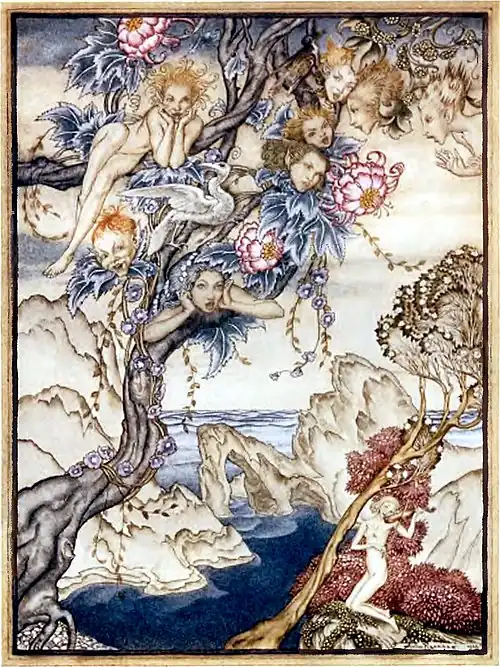
The isle is full of noises,
Sounds and sweet airs, that give delight and hurt not
Stephano.
If thou beest Trinculo, come forth: I'll pull thee by the lesser legs: if any be Trinculo’s legs, these are they. Thou art very Trinculo indeed! How camest thou to be the siege of this moon-calf? can he vent Trinculos?
Trinculo.
I took him to be killed with a thunderstroke. But art thou not drowned, Stephano? I hope now thou art not drowned. Is the storm overblown? I hid me under the dead moon-calf’s gaberdine for fear of the storm, And art thou living, Stephano? O Stephano, two Neapolitans ’scaped!
Stephano.
Prithee, do not turn me about; my stomach is not constant.
Caliban.
Stephano.
How didst thou ’scape? How camest thou hither? swear by this bottle how thou camest hither. I escaped upon a butt of sack which the sailors heaved o’erboard, by this bottle! which I made of the bark of a tree with mine own hands since I was cast ashore.
Caliban.
I’! swear upon that bottle to be thy true subject; for the liquor is not earthly.
Stephano.
Here; swear then how thou escapedst.
Trinculo.
Swum ashore, man, like a duck: I can swim like a duck, Ill be sworn.
Stephano.
Here, kiss the book. Though thou canst swim like a duck, thou art made like a goose.
Trinculo.
O Stephano, hast any more of this?
Stephano.
The whole butt, man: my cellar is in a rock by the seaside where my wine is hid. How now, moon-calf! how does thine ague?
Caliban.
Hast thou not dropp’d from heaven?
Stephano.
Out o’ the moon, I do assure thee: I was the man i’ the moon when time was.
Caliban.
I have seen thee in her and I do adore thee: My mistress show’d me thee and thy dog and thy bush.
Stephano.
Come, swear to that; kiss the book: I will furnish it anon with new contents: swear.
Trinculo.
By this good light, this is a very shallow monster! I afeard of him! A very weak monster! The man i’ the moon! A most poor credulous monster! Well drawn, monster, in good sooth!
Caliban.
I ’ll show thee every fertile inch o’ th? island; And I will kiss thy foot: I prithee, be my god.
Trinculo.
By this light, a most perfidious and drunken monster! when’s god ’s asleep, he ’ll rob his bottle.
Caliban.
I'll kiss thy foot; I ’ll swear myself thy subject.
Stephano.
Come on then; down, and swear.
Trinculo.
I shall laugh myself to death at this puppy-headed monster. A most scurvy monster! I could find in my heart to beat him,—
Stephano.
Come, kiss.
Trinculo.
But that the poor monster ’s in drink: an abominable monster!
Caliban.
Trinculo.
A most ridiculous monster, to make a wonder of a poor drunkard!
Caliban.
Stephano.
I prithee now, lead the way without any more talking. Trinculo, the king and all our company else being drowned, we will inherit here: here, bear my bottle: fellow Trinculo, we ’ll fill him by and by again.
Caliban.
[Sings drunkenly.]
Farewell, master; farewell, farewell!
Trinculo.
A howling monster; a drunken monster!
Caliban.
Freedom, hey-day ! hey-day, freedom! freedom, hey-day, freedom!
Stephano.
O brave monster! Lead the way. [Exeunt.