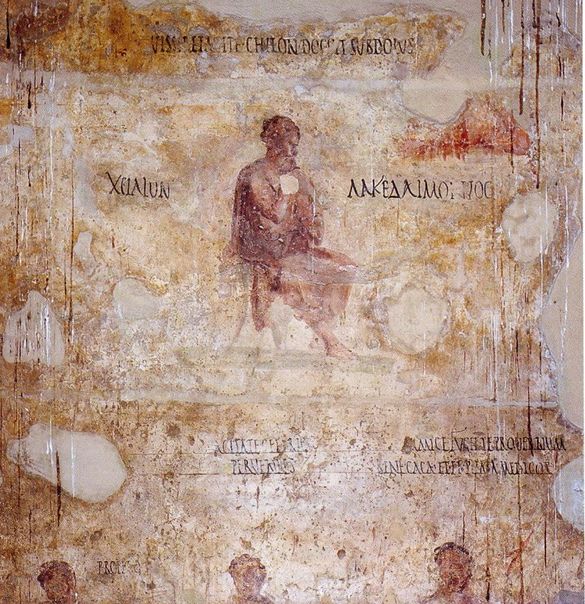
vissio
Latin
Alternative forms
Etymology
Perhaps onomatopoeic.
Pronunciation
- (Classical Latin) IPA(key): [ˈwɪs.si.oː]
- (modern Italianate Ecclesiastical) IPA(key): [ˈvis.si.o]
Verb
vissiō (present infinitive vissīre); fourth conjugation, no perfect or supine stems
- (intransitive) to pass wind quietly
Conjugation
Conjugation of vissiō (fourth conjugation, semi-deponent)
| indicative | singular | plural | |||||||||||
|---|---|---|---|---|---|---|---|---|---|---|---|---|---|
| first | second | third | first | second | third | ||||||||
| active | present | vissiō | vissīs | vissit | vissīmus | vissītis | vissiunt | ||||||
| imperfect | vissiēbam | vissiēbās | vissiēbat | vissiēbāmus | vissiēbātis | vissiēbant | |||||||
| future | vissiam | vissiēs | vissiet | vissiēmus | vissiētis | vissient | |||||||
| perfect | vissītus + present active indicative of sum | ||||||||||||
| pluperfect | vissītus + imperfect active indicative of sum | ||||||||||||
| future perfect | vissītus + future active indicative of sum | ||||||||||||
| sigmatic future1 | vissīssō | vissīssis | vissīssit | vissīssimus | vissīssitis | vissīssint | |||||||
| subjunctive | singular | plural | |||||||||||
| first | second | third | first | second | third | ||||||||
| active | present | vissiam | vissiās | vissiat | vissiāmus | vissiātis | vissiant | ||||||
| imperfect | vissīrem | vissīrēs | vissīret | vissīrēmus | vissīrētis | vissīrent | |||||||
| perfect | vissītus + present active subjunctive of sum | ||||||||||||
| pluperfect | vissītus + imperfect active subjunctive of sum | ||||||||||||
| sigmatic aorist1 | vissīssim | vissīssīs | vissīssīt | vissīssīmus | vissīssītis | vissīssint | |||||||
| imperative | singular | plural | |||||||||||
| first | second | third | first | second | third | ||||||||
| active | present | — | vissī | — | — | vissīte | — | ||||||
| future | — | vissītō | vissītō | — | vissītōte | vissiuntō | |||||||
| non-finite forms | infinitive | participle | |||||||||||
| active | passive | active | passive | ||||||||||
| present | vissīre | — | vissiēns | — | |||||||||
| future | vissītūrum esse | — | vissītūrus | vissiendus, vissiundus | |||||||||
| perfect | vissītum esse | — | vissītus | — | |||||||||
| future perfect | vissītum fore | — | — | — | |||||||||
| perfect potential | vissītūrum fuisse | — | — | — | |||||||||
| verbal nouns | gerund | supine | |||||||||||
| genitive | dative | accusative | ablative | accusative | ablative | ||||||||
| vissiendī | vissiendō | vissiendum | vissiendō | vissītum | vissītū | ||||||||
1At least one use of the Old Latin "sigmatic future" and "sigmatic aorist" tenses is attested, which are used by Old Latin writers; most notably Plautus and Terence. The sigmatic future is generally ascribed a future or future perfect meaning, while the sigmatic aorist expresses a possible desire ("might want to").
Coordinate terms
- pēdō (“to pass wind loudly”)
Derived terms
- vissium
- vissitium
Descendants
- Balkano-Romance:
- Italo-Western Romance:
- ⇒ Vulgar Latin: *vissīna, -um (see there for further descendants)
References
- “uissiō~īre” on page 2077/1 of the Oxford Latin Dictionary (1st ed., 1968–82)1
- Walther von Wartburg (1928–2002), “vĭssīre”, in Französisches Etymologisches Wörterbuch, volume 14: U–Z, page 532